VO2 max is highly trainable. Untrained adults typically gain 15–20% in 8–12 weeks of structured training; already-fit recreational athletes gain 3–10%. The fastest gains come from combining low-intensity base training with high-intensity intervals — the "polarized" 80/20 model used by most elite endurance programs.
This guide is organized around four topics, each with its own full article:
Zone 2 training
The aerobic base-building method used by every elite endurance athlete. 60–70% HRmax, 45–90 minutes, 2–3× per week.
Read →Norwegian 4x4 intervals
The most VO2-max-effective interval protocol ever tested: 4 × 4 minutes at 85–95% HRmax with 3-minute recoveries.
Read →Polarized (80/20) training
Why elite endurance athletes spend ~80% of training at easy intensities and ~20% at hard intensities — and what that means for you.
Read →VO2 max and longevity
The evidence linking VO2 max to all-cause mortality. Why each MET gain is associated with 10–15% lower mortality risk.
Read →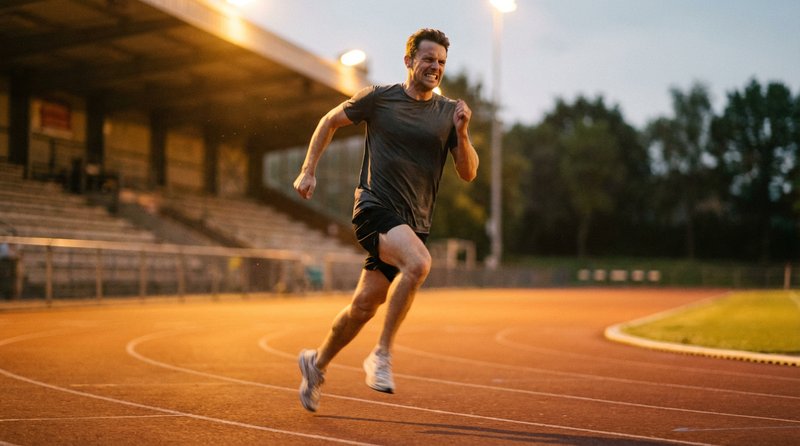
The training principles that actually work
Despite endless marketing of new methods, VO2 max training rests on three principles established in exercise physiology by the 1980s and confirmed in hundreds of randomized trials since:
- Time at high percent-VO2 max drives adaptation. More minutes accumulated at 85–95% of VO2 max per week = more improvement. Intervals are efficient because they let you accumulate more total time at that intensity than continuous efforts.
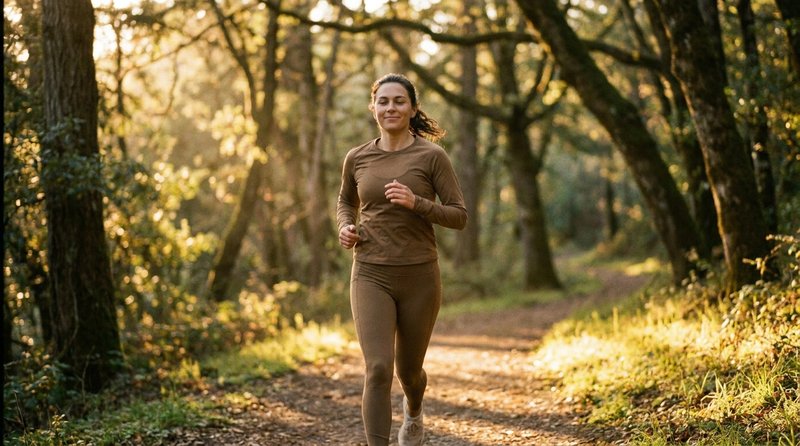
- Low-intensity volume builds the aerobic base. Zone 2 training (60–70% HRmax) increases mitochondrial density, capillary network, and fat oxidation — all prerequisites for tolerating higher-intensity work.
- Recovery is where adaptation happens. VO2 max gains result from repeated cycles of overload and recovery. Two to three hard sessions per week is the durable sweet spot; more causes overreaching for most non-elite athletes.
A sample 8-week VO2 max training plan
The plan below is a polarized 80/20 program calibrated for an adult who can already run continuously for 30 minutes (or do an equivalent volume of cycling or rowing). Heart-rate zones are based on percent of max HR; if you don't have a measured HRmax, the 220 − age estimate is acceptable for these purposes. For a more personalized result that accounts for your resting heart rate, use a Karvonen heart rate zone calculator before starting the plan.
| Week | Total sessions | Zone 2 (60–70% HRmax) | Intervals | Weekly volume |
|---|---|---|---|---|
| 1 | 3 | 2 × 40 min | 1 × 4×3 min @ 90% HRmax (3 min easy) | ~2.5 hr |
| 2 | 3 | 2 × 45 min | 1 × 4×3 min @ 90% HRmax | ~2.7 hr |
| 3 | 4 | 3 × 45 min | 1 × 4×4 min @ 92% HRmax (3 min easy) | ~3.5 hr |
| 4 | 4 | 3 × 50 min | 1 × 4×4 min @ 92% HRmax | ~3.7 hr |
| 5 | 4 | 2 × 60 min + 1 × 45 min | 1 × 5×3 min @ 92% HRmax (2 min easy) | ~4.0 hr |
| 6 | 4 | 2 × 60 min + 1 × 45 min | 1 × Norwegian 4×4 (4 min @ 92–95%, 3 min easy) | ~4.2 hr |
| 7 | 5 | 3 × 60 min + 1 × 45 min | 1 × Norwegian 4×4 | ~4.7 hr |
| 8 | 3 (deload) | 2 × 45 min | 1 × 3×3 min @ 90% HRmax | ~2.5 hr |
Retest at the end of week 8 — most adherent users see a 10–18% gain over baseline. The Norwegian 4×4 protocol is documented in detail on its own page.
How long does it take to improve VO2 max?
Measurable changes appear sooner than most people expect. Mitochondrial density and plasma volume — the early adaptations — start expanding within 2–3 weeks of consistent training. Stroke-volume increases (the central cardiovascular adaptation) take 4–8 weeks to register. By week 4, most untrained adults can detect a shift in their resting heart rate (typically 5–10 bpm lower) and a noticeable improvement in conversational running pace.
Peak response from any single training block lands at weeks 8–12. Beyond that, gains slow as you approach your current ceiling and progressive overload becomes necessary — longer intervals, more sessions, or harder formats. Trained athletes see 1–3% improvements per 8–12-week training cycle; untrained adults still see 10–20%.
VO2 max training by sport
The cardiovascular adaptations are sport-agnostic — your heart and lungs don't know whether you're running or rowing. But mode-specific economy and tested VO2 max do differ between modalities, because the muscles you train are the muscles that contribute to the test. A few notes:
- Running. The most accessible VO2 max stimulus per minute. Treadmill and field-test VO2 values are usually the highest reported numbers for trained athletes. Use the Cooper 12-minute run or 1.5-mile run for testing.
- Cycling. Lower joint load makes cycling great for high-volume zone 2 and for athletes with running injuries. Cycling VO2 max scores typically run 5–10% below treadmill scores in non-cyclists; trained cyclists test similar or higher on the bike. Use the Åstrand-Rhyming cycle test for estimation.
- Rowing. Engages legs, core, and upper body — produces the highest absolute VO2 max scores in elite athletes (commonly 70+ ml/kg/min in international rowers). Strong choice for total-body cardiovascular development. The Concept2 erg's predicted-VO2 calculation is reasonably accurate for trained users.
- Swimming. Swimming VO2 max scores test 10–20% lower than running for non-swimmers because of skill-dependent economy. Swimming is excellent for recovery-day cardiovascular work and for athletes with land-based injuries — but poor as a primary VO2 max-development modality unless you're a trained swimmer.
What doesn't work (or barely works)
- Only low-intensity training. 100% zone 2 produces modest VO2 max gains — continuous easy cardio alone rarely exceeds 5–8% improvement. You need some high-intensity stimulus.
- Only high-intensity training. All-HIIT programs burn out quickly and plateau after 6–8 weeks. Without an aerobic base you can't recover between high-intensity sessions.
- Altitude training for non-elites. "Live high, train low" helps elite athletes eke out 1–3% gains. For recreational athletes the return-on-effort is dominated by just training more consistently.
- Strength training alone. Lifting doesn't raise VO2 max directly. But 2 strength sessions per week alongside aerobic training improves running economy and delays fatigue — indirect but real.
Frequently asked questions
- How much can I improve my VO2 max?
- Untrained adults typically see 15–20% gains in 8–12 weeks of structured aerobic training. Already-fit recreational athletes see 3–10% gains in 12 weeks. Elite athletes near genetic ceilings see 1–3% per year.
- What type of training increases VO2 max fastest?
- High-intensity intervals at 85–95% of HRmax — particularly Norwegian 4x4 (four 4-minute intervals) — produce the fastest VO2 max gains per hour of training. Studies show 5–10% improvements in 6–8 weeks with 2 HIIT sessions per week.
- How often should I train for VO2 max?
- Most research supports 3–5 sessions per week: 2–3 sessions of zone 2 (easy aerobic, 60–70% HRmax), 1–2 sessions of intervals, and 1 rest day. This "polarized" 80/20 split is standard in elite endurance programs.
- Does strength training help VO2 max?
- Directly, no — strength training alone doesn't meaningfully raise VO2 max. Indirectly, yes: it increases running economy and power, letting you sustain a higher percentage of your VO2 max for longer. Include 2 sessions per week.
- How long until I see results?
- Measurable VO2 max improvements appear in 4–6 weeks of consistent training. Peak response for most protocols is at 8–12 weeks. After that, further gains require progressive overload: longer intervals, higher volume, or added variety.
- Can you improve VO2 max after 50?
- Yes — and the relative gains are similar to younger adults. Studies in adults aged 50–70 show 10–20% VO2 max improvements with 12 weeks of structured training, combining easy aerobic work and 1–2 weekly interval sessions. The absolute ceiling is lower than at 30, but trainability is preserved well into the 70s.
- Does weight loss improve VO2 max?
- Indirectly, yes. VO2 max is expressed per kilogram of body weight (ml/kg/min), so losing fat mass without losing aerobic capacity raises your number even if absolute oxygen uptake is unchanged. A 10% reduction in body weight typically lifts weight-adjusted VO2 max by 5–8% on its own. Combined with training, the effects compound.
- Can I improve VO2 max with cycling instead of running?
- Yes. The cardiovascular adaptations are mode-independent — your heart and oxygen-delivery system don't care whether you're running, cycling, or rowing. Where mode matters is sport-specific economy: a runner tested on a bike will score lower than on a treadmill, and vice versa, because their muscles aren't equally trained. Train in the modality you care about for performance; train in any cardio modality for general fitness gains.